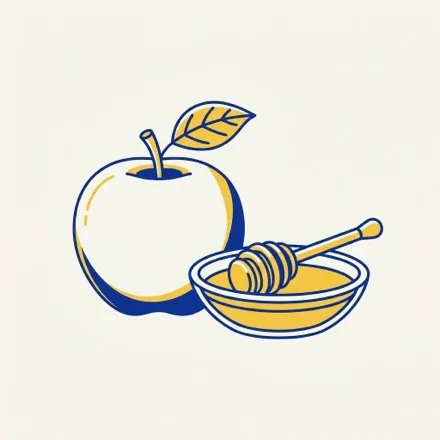
The apple
תפוח
Dipped in honey, for a sweet year. The Rema's addition, followed everywhere : except in Tunis, where the apple is sweet “as the apple”, honey having its own place.
The Talmud names five. Communities built whole sedarim out of them, and no two are alike. Here are the five we were able to read in their own source, in the exact order each one eats them.
א
Choose a rite
The foods rearrange into the order this rite eats them. What it does not include fades away.

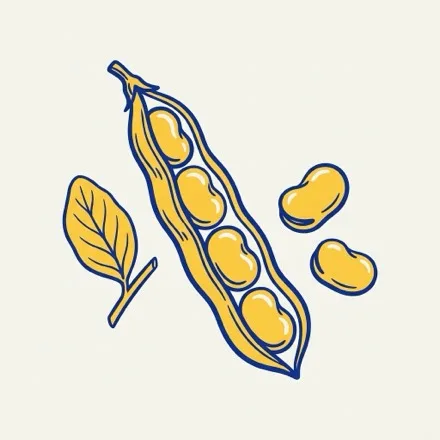
ב
Abaye, in the Talmud, on omens taken seriously:
לְעוֹלָם יְהֵא רָגִיל לְמִיחְזֵי בְּרֵישׁ שַׁתָּא קָרָא וְרוּבְּיָא, כַּרָּתֵי וְסִילְקָא וְתַמְרֵי
“A person should always be accustomed to seeing, at the head of the year, squash and rubia, leeks and chard and dates.”
Talmud, Horayot 12a : read on Sefaria
ג
תפוח
Dipped in honey, for a sweet year. The Rema's addition, followed everywhere : except in Tunis, where the apple is sweet “as the apple”, honey having its own place.
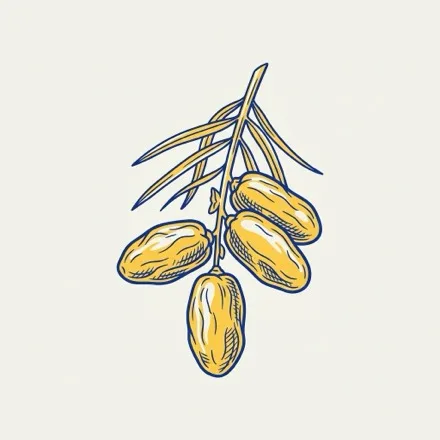
תמר · יתמו
Tamar sounds like yitamu: may those who wish us harm come to an end. The Ben Ish Hai eats one, says the formula, then eats a second.
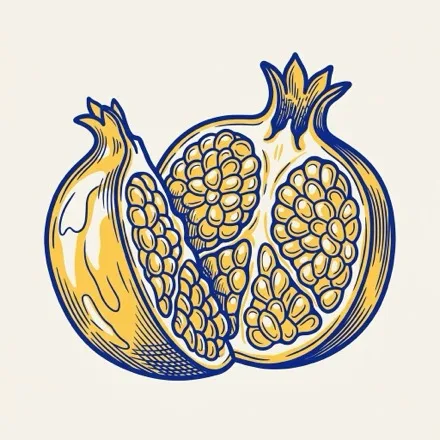
רימון
As many merits as the pomegranate has seeds. Some say “may our merits multiply”, others “may we be full of mitzvot”.
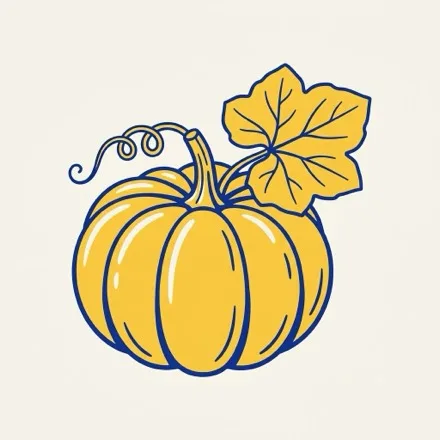
קרא · תקרע · יקראו
Kra carries two requests at once: may the evil decree be torn (tikra), and may our merits be read (yikaru). In Djerba it is called qar'a; in Tunis it is eaten as honey fritters.
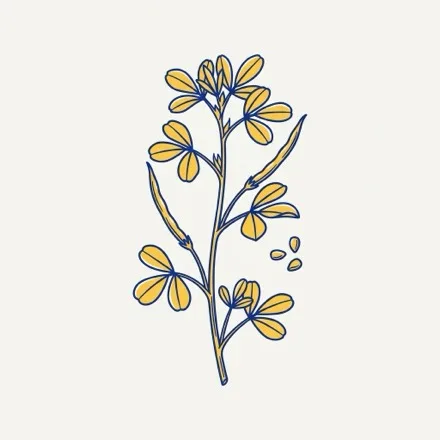
רוביא · ירבו
The Shulchan Arukh writes “rubia, that is tiltan”, and Rashi says the same on Horayot 12a. The Koren mahzor glosses it “חילבה”. That is the reading of the text.
לוביא · ירבו · לב
The Ben Ish Hai writes that rubia is “what we call lubia in Arabic”, and Rav Khalfon of Djerba writes the same. In Arabic-speaking lands one adds “u-telabevenu”: the word sounds of lev, the heart.
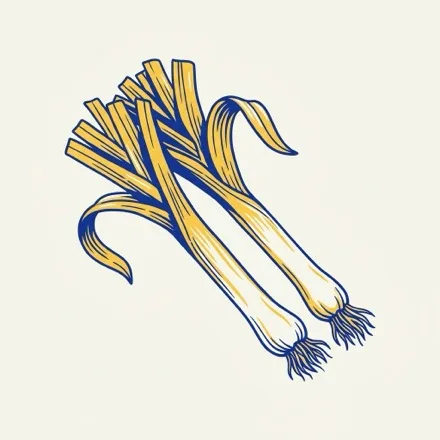
כרתי · יכרתו
Karti sounds like yikartu: may they be cut off. In Djerba, karat.
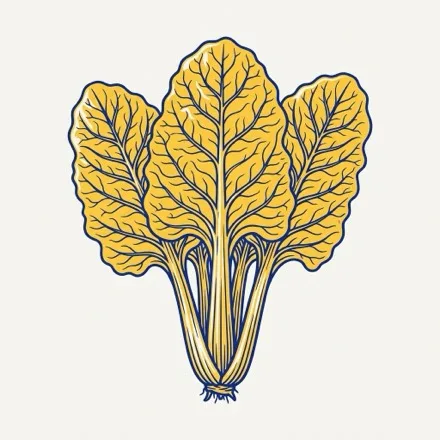
סלקא · יסתלקו
Silka sounds like yistalku: may they depart. In Djerba, salq. In Tunis, spinach, as honey fritters.
סלק · יסתלקו
Same wordplay, another vegetable: the Ashkenazi rite takes the beet where the Sephardi takes chard.
ראש
The head and not the tail. A lamb's head by preference, recalling Isaac's ram; failing that, a fish head. The Ben Ish Hai rules out a goat's head.
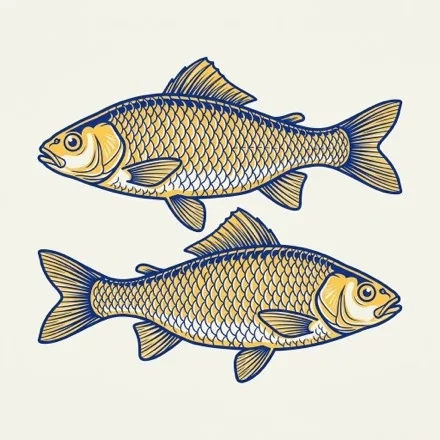
דגים
Fruitful and many as fish. In Tunis some add: and watch over us with an open eye, for the fish has no eyelid.
דבלה
It opens the Tunis seder, before the pomegranate and the apple: may the year be sweet as the fig.
שומשמין · ירבו
Particular to Tunis: may our merits be as many as sesame seeds.
פול · יפלו
Particular to Tunis: foul sounds like yipolu, may they fall before us.
שום · יתמו
Particular to Tunis, carrying the request others attach to the date: may those who wish us harm vanish from before us.
דבש
In Tunis, honey is a siman in its own right, with its own shehakol blessing: sweet as honey, from the start of the year to its end.
ד
This is the question that comes up most, and the texts do not all say the same thing. The Shulchan Arukh writes “rubia, that is tiltan” (fenugreek), and Rashi says the same on Horayot 12a. The Koren mahzor glosses it “חילבה”, the same word.
But the authorities writing in Arabic-speaking lands read it otherwise. The Ben Ish Hai, in Baghdad, writes that rubia is “what we call lubia in Arabic”. Rabbi Moshe Khalfon HaCohen, in Djerba, writes exactly the same: “and in Arabic, lubia”. For a Tunisian family the answer is therefore lubia, and it comes from a Tunisian authority.
Both readings are old and defensible. It is not a mistake on either side; the word rubia carries both.
ה
Rabbi Moshe Khalfon HaCohen, Djerba
וכן רוביא (ובערבי לוביא) ואומרים יה״ר וגו׳ שירבו זכיותינו
“And likewise the rubia (and in Arabic, lubia), and one says: may our merits multiply.”
Brit Kehuna, Orach Chayim, Rosh Hashana § 12, pages 209-210 · Djerba, 1941 · see the facsimile
Read in the facsimile of the page. It is an authority of Djerba writing here, for his own community, that the Talmud's rubia is the lubia. On the same page he adds the lung, the heart and the egg to his seder, then notes that their order is not insisted upon: one takes what is ready.
Sources read on Sefaria: Talmud, Horayot 12a (Abaye) · Shulchan Arukh, Orach Chayim 583:1
The order of the simanim varies between communities. Tunisian families have their own. Follow your family's custom.
Sources read on Sefaria: Talmud, Horayot 12a (Abaye) · The Koren Rosh HaShana Mahzor, Ashkenaz
The mahzor places “borei peri ha'adama” over the rubia, which it glosses “חילבה”, fenugreek, as the Shulchan Arukh does.
Sources read on Sefaria: Talmud, Horayot 12a (Abaye) · Ben Ish Hai, Halachot 1st Year, Nitzavim 4
The Ben Ish Hai writes that rubia is what is called lubia in Arabic, and that over the apple one says “a good and sweet year” without adding “like honey”.
Brit Kehuna, Orach Chayim § 12, pages 209-210 · Rabbi Moshe Khalfon HaCohen, Djerba 1941
Each siman carries its Judeo-Arabic name: qar'a, lubia, salq, karat. Rav Khalfon writes that their order is not insisted upon: one takes what is ready. The last three are transliterated, the source not vocalising them.
Tunis seder · printed sheet “Séder pour les deux soirées” and “La page de miel”, in agreement · in Djerba, Brit Kehuna follows the Shulchan Arukh order
A collection of customs, not a book of rulings : the Hebrew is in your family's siddur. In Tunisia the Motzi bread is dipped in sugar, and Shehecheyanu is said once over a new fruit.
The generator uses these same sedarim, with your city's times and each guest's name.
Print your own sheet